
Moving Past the Keyboard Bottleneck
A surprising number of operational teams are still typing invoices by hand into their core
financial systems. Despite modern digital tooling, the finance back office remains tethered to
manual extraction, human transcription, and repetitive reconciliation cycles. This creates
administrative friction that delays month-end closes, introduces preventable human error, and
inflates overhead. The shift occurs when artificial intelligence replaces manual transcription with
native document ingestion directly tied to your cloud architecture.
Unified Document Capture Across Distributed Channels
The breakdown in accounts payable typically starts at ingestion. Documents arrive fragmented
across disparate channels, including emails, manual uploads, physical scans, and supplier
portal drops. Rather than forcing finance staff to sort these inputs by hand, an integrated system
routes every invoice, purchase order, and supplier document into a unified destination.
Everything lands in the same centralized place without any manual pre-sorting, establishing an
immediate pipeline for systematic processing.
High-Fidelity Extraction and Autonomous Validation
Multi-Field Extraction in Seconds
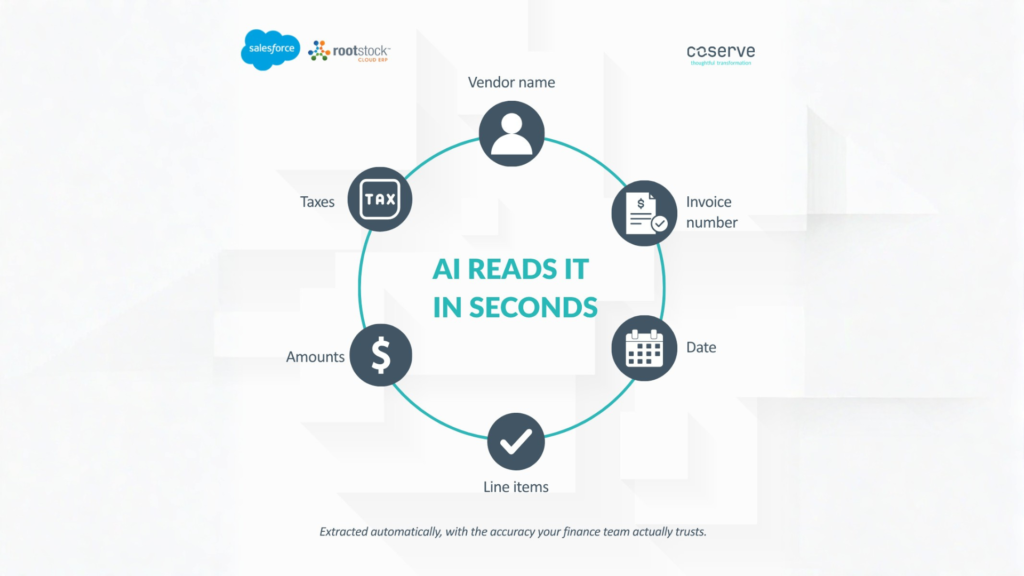
Once captured, the intelligence layer reads and extracts document contents in seconds rather
than minutes. It automatically captures critical data points, including vendor names, tax details,
invoice numbers, dates, line items, and total amounts. Crucially, this extraction is designed to
deliver the high fidelity and accuracy that finance teams need to trust automated records without
line-by-line second-guessing.
Catching Discrepancies Before They Compound
The real architectural value lies in automated validation against the core system of record.
Mistakes get caught before they cost the organization money. Every extracted entry is
immediately checked and cross-referenced directly against existing data in your enterprise
resource planning environment. When entries match, the transactions move forward
automatically. When mismatches are detected, they are flagged and routed for human approval.
Once validated, clean data flows straight into your ERP without manual intervention.
The Fully Automated Transaction Pipeline
Connecting ingestion directly to execution creates a fully automated pipeline from the initial
inbox arrival all the way to the final audit trail. Financial teams no longer need to spend their
working hours manually reconciling invoices against purchase orders or re-keying line items
across siloed screens.
The Operational Dividends of Automated Processing
This architectural shift delivers clear operational gains across the entire business. Organizations
realize faster processing cycles, significantly higher data accuracy, and lower administrative
operational costs. At the same time, maintaining a clean digital thread across the entire
workflow ensures rigorous compliance, complete financial visibility, and the structural foundation
required for scalable growth.